Annapurna Base Camp Trek Permit: Costs, Process, and How to Get It
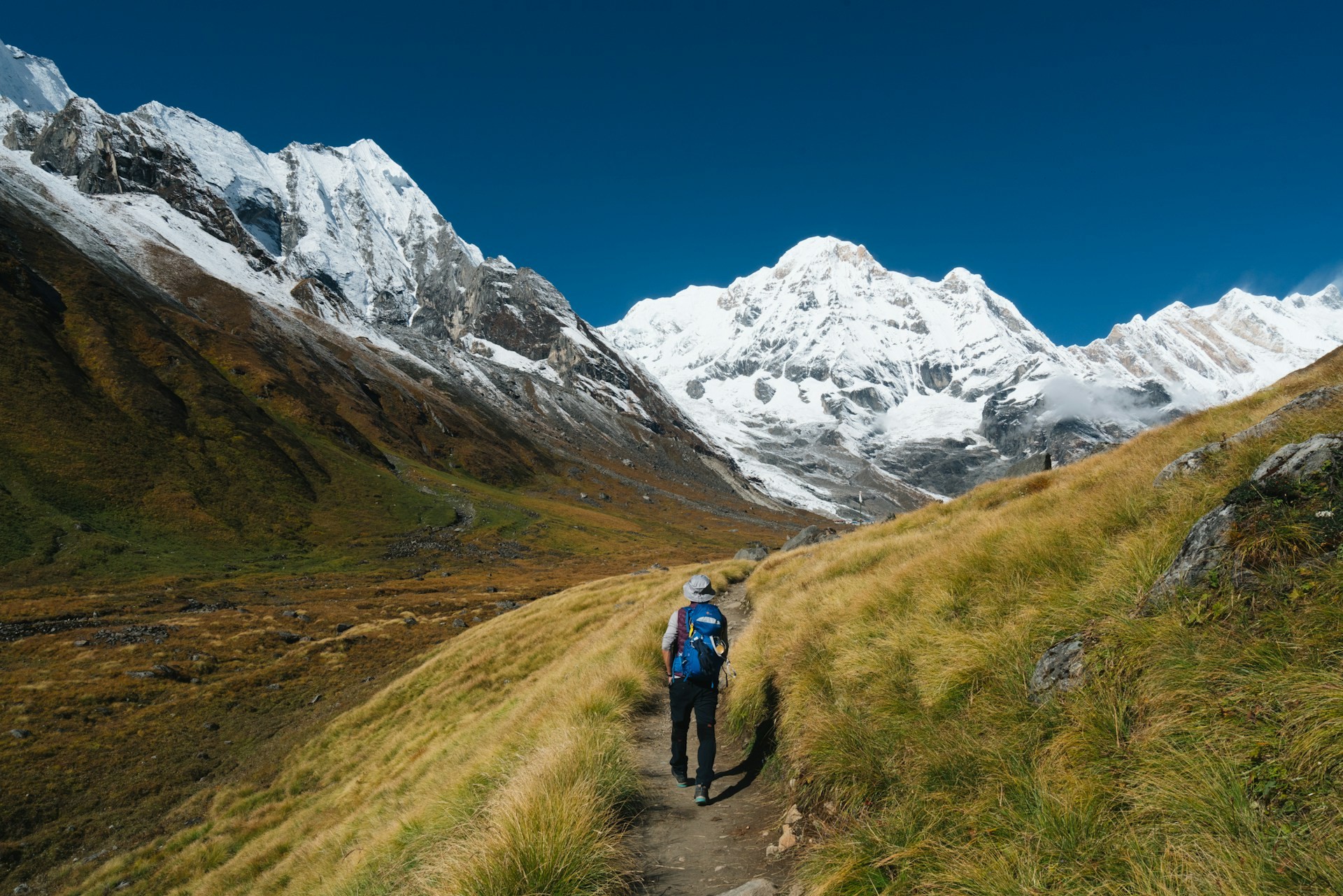
The first checkpoint on the Annapurna Base Camp trek sits at Birethanti, 1,025 metres above sea level. If you arrive without a permit, the officer will sell you one on the spot. Double price. It is not an anomaly or a one-off situation — it is standard practice, and it catches a steady number of trekkers every season.
This guide covers the two permits required for ABC, what they cost, what documents to bring, and how to get them without paying double.
What permits do you need for the Annapurna Base Camp trek?
Two permits are required for all foreign trekkers entering the Annapurna Conservation Area.
The Annapurna Conservation Area Permit (ACAP) is the primary document. It is managed by the National Trust for Nature Conservation (NTNC) and covers the entire Annapurna region, including the ABC route. Without it, you cannot pass the Birethanti checkpoint.
The Trekkers' Information Management System card (TIMS) is the second permit. This is where things get confusing. Some sources published in 2023 state that TIMS was abolished for Annapurna. Most sources updated in 2025 and 2026 confirm it is still required. The honest answer: the position has been unclear, and different permit offices give different guidance depending on when you visit.
The safe approach is to get both. If TIMS genuinely is no longer required, your guide agency will tell you at the time of booking. If you are arranging permits without an agency, confirm the current TIMS status with the NTB office in Pokhara or Kathmandu before you go — not from a blog post, but from the office itself.
What do the permits cost?
ACAP costs NPR 3,000 for foreign nationals, roughly USD 25. SAARC nationals pay NPR 1,000. Nepali citizens and children under ten enter free.
TIMS costs NPR 2,000 for individual trekkers or NPR 1,000 for group trekkers. If you are trekking with a licensed guide through an agency, the group rate applies, bringing the total to NPR 4,000 for both permits — about USD 30.
Add NPR 200-500 for passport photos and photocopies. Total cost for most foreign trekkers: NPR 4,500-5,000, or USD 34-40.
All fees are payable in Nepali rupees. The offices do not accept cards or foreign currency.
What documents do you need?
Bring all of these before visiting the permit office:
- Your passport, valid for at least six months
- Four passport-size photos. Bring four, not two. Each permit is a separate application requiring two photos. Many trekkers arrive with two photos and have to find a photo shop nearby before they can complete both permits.
- Your Nepalese visa
- Your guide's TAAN license number (see below)
- Nepali rupees in cash
The mandatory guide requirement
Since April 1, 2023, all foreign trekkers on routes requiring a TIMS card must trek with a licensed guide. This applies to the ABC route.
The practical consequence is significant: your guide's TAAN (Trekking Agencies' Association of Nepal) license number must appear on your permit application at the time of issue. You cannot amend a permit after it has been issued.
This means you need to have your guide arranged before you visit the permit office, not after. Hiring someone at the trailhead in Nayapul does not satisfy the requirement, because their license number will not be on your permit.
If you are booking through a trekking company, this is handled for you. If you are arranging things yourself, confirm your guide's TAAN license number before going to the permit office.
How to get your permits: step by step
- Arrange your guide first. Get their full name and TAAN license number.
- Gather your documents: passport, four photos, visa, guide's license number, NPR cash.
- Go to the permit office in Kathmandu or Pokhara (not Birethanti).
- Complete the application forms — one for ACAP, one for TIMS. Both available at the office.
- Pay the fees in Nepali rupees and collect your permits. Processing is same-day. Allow 1-2 hours during peak season (October, April) when queues reach 20-40 people.
- Store both permits in a waterproof sleeve or pocket. You will need to present them at multiple checkpoints.
Where to get your permits
Permits are available at the Nepal Tourism Board offices in Kathmandu and Pokhara.
Kathmandu — NTB Bhrikutimandap
Sunday to Thursday, 10am to 4pm. Friday, 10am to 3pm. Closed Saturday.
Pokhara — NTB Lakeside Road
Sunday to Friday, 10am to 5pm. Closed Saturday.
Pokhara is faster. Outside peak trekking season, the Lakeside office processes permits with shorter queues than Kathmandu. If you are flying direct to Pokhara and starting from Nayapul, get your permits in Pokhara rather than rushing through Kathmandu before your flight.
The Saturday trap
Both offices are closed on Saturdays. Nepal's government offices observe Saturday as their weekly day off.
Every season, trekkers fly into Pokhara on Friday evening planning to start Saturday morning. There is no official permit route available to them. Their options: delay a day and get permits Sunday morning, go to the Birethanti checkpoint and pay double, or arrange permits through an agency in advance.
If your itinerary puts you in Pokhara on a Friday, plan to get permits that day before 5pm — or arrange them in advance through your trekking company.
Can you get permits at the trailhead?
You can collect an ACAP permit at the Birethanti checkpoint, but at double the standard rate. There is no discount, no exception, and no negotiation. Trekkers who skip the offices in Pokhara or Kathmandu consistently report paying double.
Getting permits in advance at the NTB office takes two hours and costs NPR 4,000-5,000. Waiting for Birethanti costs NPR 6,000 plus the inconvenience of starting your trek with an unresolved admin problem.
What happens at permit checkpoints
The ABC route has two primary permit checkpoints and occasional additional checks.
Birethanti at 1,025m is the first and most important. It is on the Nayapul approach and unavoidable. Officers check ACAP and TIMS here, verify your guide's license, and record your details.
Chhomrong at 2,170m is the second verification point. If you do not have a valid permit from Birethanti, officers at Chhomrong can turn you back — meaning a full day lost descending to resolve the issue. Ghandruk has a third checkpoint with random additional checks possible at Bamboo and Deurali.
Permits are checked against your passport. Carry both.
One shortcut worth knowing
The NTNC operates an online permit portal at epermit.ntnc.org.np. You can pre-fill your application details and pay online before visiting the office. Physical collection is still required, but you skip the form-filling queue — saving 30-45 minutes during peak season. Most first-time trekkers are not aware this exists.
Plan your trek with Highlander
Highlander handles permit arrangements as part of all guided ABC packages. Your guide's TAAN license number is on your application before you reach the office, your permits are sorted before you reach Birethanti, and the Saturday trap does not apply when you book in advance.
Get in touch to start planning your Annapurna Base Camp trek.

-
PO Box: 10987
Thamel, Kathmandu -
+977-01-4700563, +977-01-4700066
Whatsapp: +977 9851167070

