Annapurna Base Camp Trek: Complete Guide for 2025/2026
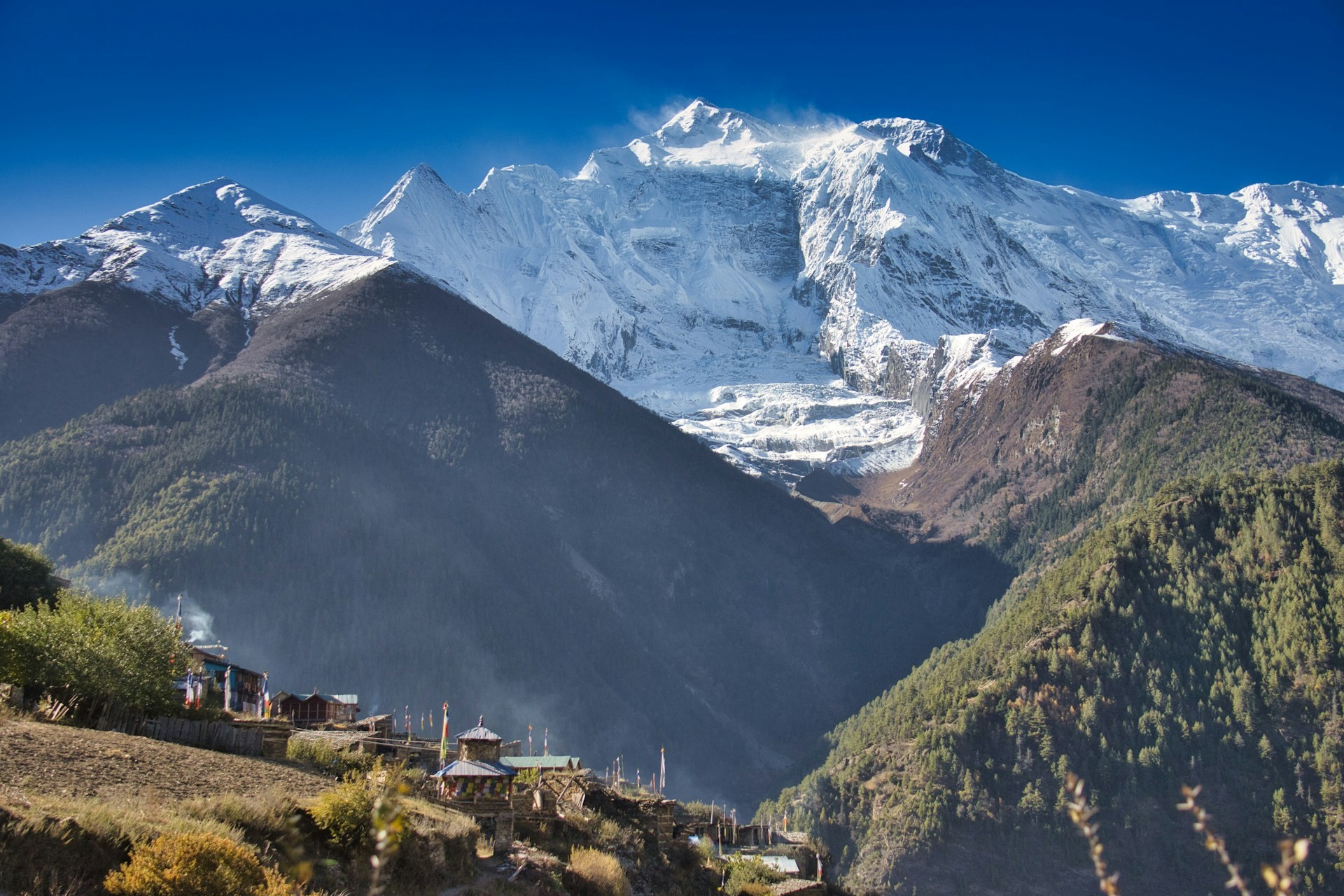
Three thousand five hundred steps. That is what it takes to reach Ulleri from Hile, and that is just day two. Before you read anything else about the Annapurna Base Camp trek, know this: the steps are the defining feature of the route, not the views. Every trekker who has done it says so afterward.
That said, 4,130 metres above sea level, surrounded by Annapurna I, Annapurna South, Machhapuchhre, and Gangapurna, the Annapurna Base Camp trek delivers something most trekkers do not have words for when they arrive. This guide covers the route, what it costs, the permits you need, and what most ABC guides leave out.
What the ABC trek involves
The Annapurna Base Camp trek follows a route through the Annapurna Conservation Area from Pokhara into the Annapurna Sanctuary, a glacial amphitheatre at 4,130m surrounded by eight peaks above 7,000 metres. The standard route takes 7 to 10 days depending on which trailhead you start from and how many rest days you build in.
The trek is classified as moderate. That classification is accurate but incomplete. The terrain is not technical and no mountaineering experience is required. But the elevation gain is relentless, the stone steps are everywhere, and the final approach from Deurali to ABC above 3,500m is where fitness becomes secondary and altitude takes over. Most healthy adults in reasonable shape can complete it. Most also find it harder than they expected.
Route overview — stage by stage
Most trekkers drive from Pokhara to Nayapul or Ghandruk to start, cutting one to two days of flat road walking.
Nayapul to Tikhedhunga / Hile (Day 1)
Gentle start. Flat to rolling terrain through farmland and small villages. 4 to 5 hours. Use this day to find your rhythm and check your pack weight. The steps have not started yet.
Hile to Ghorepani (Day 2)
The climb to Ulleri begins immediately: 3,500 stone steps rising steeply through rhododendron forest. No shortcut. Most trekkers need two to three hours just for this section. From Ulleri, a further two-hour climb reaches Ghorepani at 2,860m. This is the day that separates those who packed light from those who did not.
Ghorepani to Chhomrong (Days 3–4)
Poon Hill detour is optional (sunrise views of Dhaulagiri and Annapurna range, 45-minute pre-dawn climb). Then a long descent and re-ascent through Tadapani to Chhomrong at 2,170m. Chhomrong has the last reliable phone signal and ATM. Stock up on cash. From here, the route descends steeply into the Modi Khola valley before climbing to the main trail.
Chhomrong to Deurali (Days 4–5)
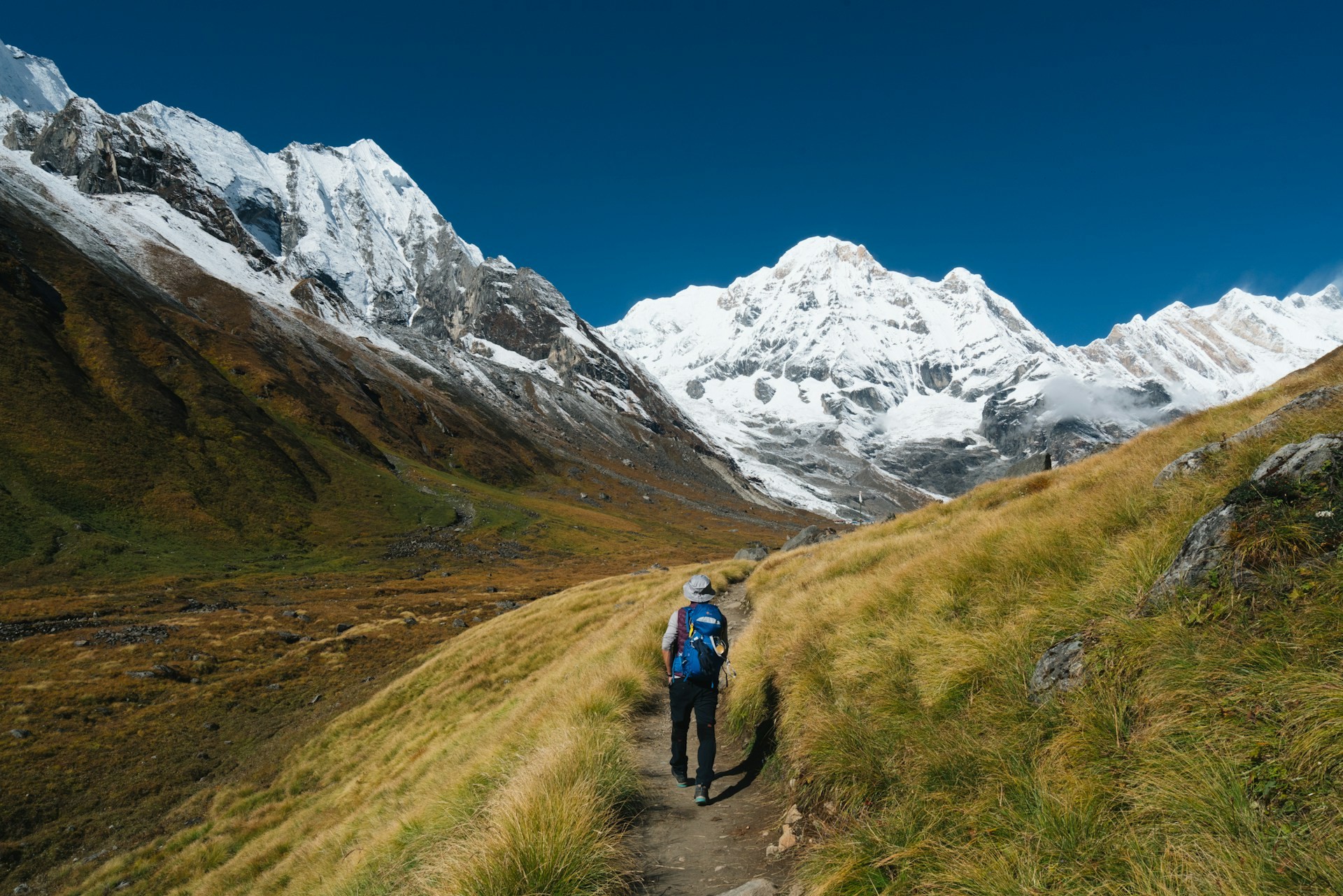
The landscape changes. Forest gives way to bamboo then to open alpine terrain. Villages thin out. Teahouses become smaller. The trail passes through Bamboo, Himalaya, and Dovan before reaching Deurali at 3,230m. Altitude begins to matter here. Slow down if you feel it.
Deurali to Annapurna Base Camp (Day 6)
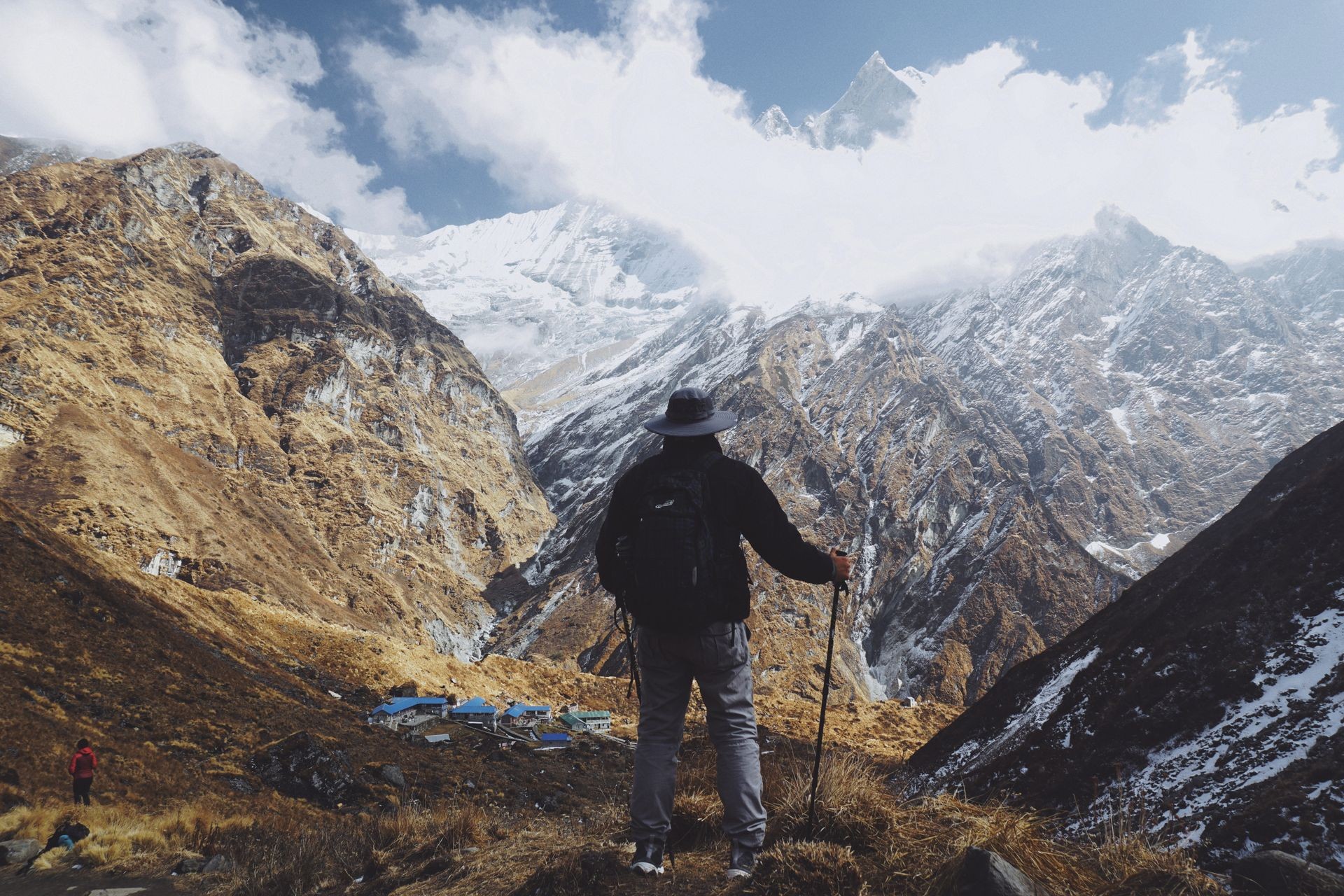
The final push. Four hours of gradual ascent through Machhapuchhre Base Camp (3,700m) to ABC at 4,130m. Above 3,500m, trekkers who felt fine the day before notice the change. One traveller told us: "Your legs suddenly weigh twice as much as yesterday. Your steps shorten." The lodges at ABC come into view long before you reach them, and take longer to reach than you expect.
Return (Days 7–9)
The descent is faster but not easier. Chhomrong's stone steps going down are, by several accounts, worse than going up. A traveller described them plainly: "Steep. Relentless. I will never forget them." Trekking poles protect knees significantly on descent. Even trekkers who managed the climb without them often regret it by the time they reach Jhinu Danda.
Permits for the Annapurna Base Camp trek
Two permits are required:
ACAP (Annapurna Conservation Area Permit): NPR 3,000 for foreign nationals. This covers the entire Annapurna Conservation Area.
TIMS (Trekkers' Information Management System) card: NPR 2,000 for independent trekkers. If you book through a registered agency, TIMS is typically included.
Both permits can be obtained at the Nepal Tourism Board office in Pokhara (Lakeside) or Kathmandu (Bhrikutimandap). You will need passport photos and a copy of your passport.
Important: since April 2023, all foreign trekkers on major Nepal trekking routes — including the ABC — are required to hire a licensed guide through a TAAN-registered agency. Independent trekking without a guide is no longer permitted. Many older articles and guides online do not mention this. Factor guide costs into your budget from the start.
Best time for the Annapurna Base Camp trek
Autumn (October to November) is the most popular season. Post-monsoon skies are clear, temperatures are comfortable, and rhododendrons are still visible. It is also the busiest time on the trail.
Spring (March to May) is the other peak season. Rhododendrons bloom in red and pink through the forest sections. Temperatures are warmer, cloud builds in the afternoons but mornings are usually clear.
Winter (December to February) is cold above 3,000m but the trail is quieter and snow above MBC adds atmosphere. Teahouses remain open on most sections.
Monsoon (June to September) is possible but difficult. Leeches on lower sections, reduced visibility, and some trail closures. The Sanctuary can fill with cloud for days. Not recommended unless you specifically want an off-season experience.
What it costs
Permits: NPR 5,000 (approximately USD 37) for ACAP and TIMS combined.
Guide: USD 25 to 35 per day. A 10-day trek with a guide costs USD 250 to 350 for the guide alone.
Food and accommodation on the trail: teahouses charge NPR 400 to 800 for a room. Food costs rise significantly at altitude. At lower elevations, a meal and tea costs NPR 500 to 800. At MBC and ABC, the same meal costs NPR 1,200 to 1,800. Budget more than the permit costs suggest — food on the trail is where most trekkers are caught short. One trekker told us the food costs took her completely by surprise.
Full packages from a registered agency: USD 600 to USD 1,200 depending on group size, duration, and inclusions. A package typically covers permits, guide, porter, accommodation, and most meals.
What most guides leave out
The steps are everywhere. Not just Ulleri. There was no single day on this route where trekkers did not spend significant time climbing or descending stone staircases. If your knees have any history, talk to a physio before you go. Trekking poles are not optional equipment — they are the difference between finishing comfortably and limping out.
Darkness falls fast. There is no gentle twilight at altitude in Nepal — it goes from dusk to full dark in minutes. One trekker described it: "the darkness descends like a curtain." If you are still walking after 5pm, your headlamp needs to be on your head, not in your bag.
Food safety varies. One trekker ordered a vegetarian curry and received chicken. The following morning was rough. At altitude, gastrointestinal issues compound. Stick to cooked food, avoid salads at higher elevations, and carry oral rehydration salts.
Arriving at ABC does not feel how you expect it to. One trekker described the moment perfectly: "The buzz of a coming hot shower faded. Instead I felt something else: a kind of emptiness." Not triumph, but something quieter. You have been telling yourself you are not ready for something like this for years. Then you are there. Allow time to sit with it.
Book your ABC trek with Highlander
Highlander runs guided Annapurna Base Camp treks throughout the autumn and spring seasons. Packages cover permits, a licensed naturalist guide, accommodation, and most meals. Group sizes are kept small.
For permit details, costs, and the specific documents you need before you leave Pokhara, read the Annapurna Base Camp trek permit guide.
View current Annapurna Base Camp trek packages on highlandernepal.com.

-
PO Box: 10987
Thamel, Kathmandu -
+977-01-4700563, +977-01-4700066
Whatsapp: +977 9851167070

