Everest Base Camp Trek Cost: Full Breakdown for 2025/2026
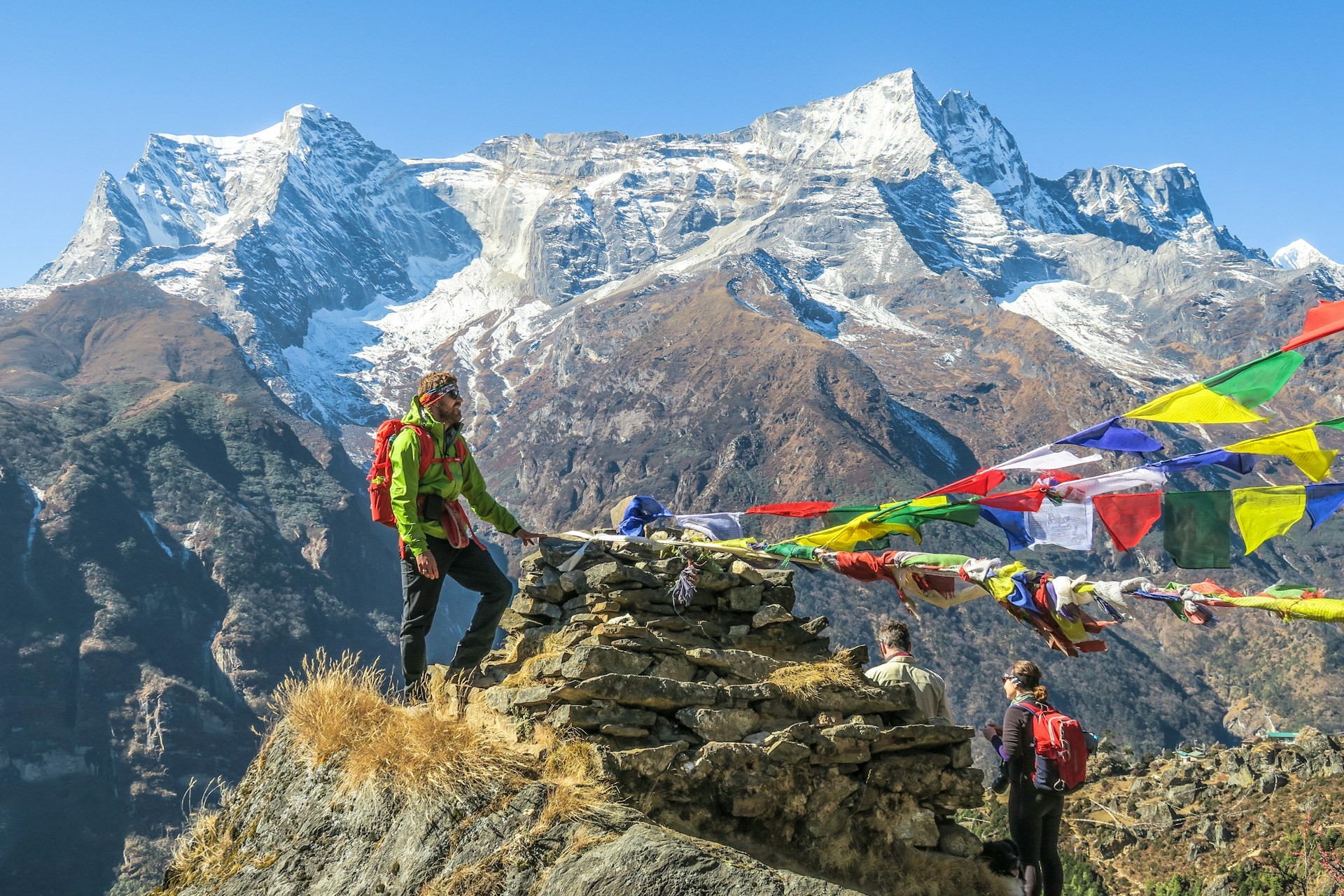
Most guides quote a single number for the Everest Base Camp trek cost. That number is usually wrong, or at least incomplete. The real cost depends on how you travel, what season you go, and how many corners you cut. Budget trekkers and premium group travellers can spend anywhere from $1,200 to $5,000 on the same route. This guide breaks down every real expense so you can plan with accurate numbers.
Permit Costs
Two permits are required for the EBC trek. The Sagarmatha National Park Entry Permit costs NPR 3,500 (approximately $26 USD). The TIMS card costs NPR 2,000 (approximately $15 USD) when trekking with a registered guide. Total permit costs run roughly $40-45 USD per person. These are fixed government fees and do not change by season or operator. Your agency handles the paperwork; you pay the fees.
Guide and Porter Fees (Now Mandatory)
From April 2025, the Nepal government made licensed guides mandatory on all trekking trails, including the Everest Base Camp route. This was widely expected and is now law. Independent trekking without a guide is illegal and checkpoints enforce this.
A licensed guide costs $25-35 per day. On a standard 14-day EBC trek, that comes to $350-490. A porter costs $18-25 per day. Porters typically carry bags for around 12 of the 14 trail days, putting the total at $216-300 per porter. Most trekkers hire one porter between two people, sharing the cost.
Combined guide plus porter cost for a 14-day trek: roughly $566-790. If you are trekking solo, budget the full porter cost yourself. Tipping is separate and covered below.
Tea House Accommodation and Food
The EBC route is serviced by tea houses throughout. Accommodation in a twin-share room runs $5-20 per night. The price increases with altitude. Below Namche Bazaar, expect $5-8. Above Dingboche and Lobuche, $15-20 is normal. Private rooms cost more; twin-share is standard.
Food on the trail costs $25-40 per day covering three meals and snacks. Dal bhat is the best value and gives the most energy. Western options cost more and quality drops at higher altitude. For a 14-day trek (12 nights accommodation, 14 days food), budget $300-700 for accommodation and $350-560 for food. Total tea house costs: roughly $650-1,260.
Kathmandu to Lukla Flights
The domestic flight from Kathmandu to Lukla is the biggest single logistics cost. A one-way flight runs $165-220. Round trip: $330-440. Helicopter to Lukla (a premium option used during flight disruptions): $500 or more one way.
Lukla airport operates on visual flight rules. Cloud, fog, or rain grounds all flights. Delays of 1-3 days are common, especially in April-May and October-November. Build at least one buffer day into your itinerary and verify your travel insurance covers flight delay costs. This is not a hypothetical risk.
Kathmandu Hotel and Transit
Most trekkers spend 2-3 nights in Kathmandu before the trek and 1-2 nights after. Budget hotels in Thamel run $20-40 per night. Mid-range options: $60-120 per night. Airport transfers cost $8-15 each way by private car. Factor in 4-5 nights of Kathmandu accommodation total.
Equipment and Gear
Renting in Kathmandu is cost-effective: sleeping bags rent at $2-5 per day, down jackets at $2-4 per day, and trekking poles at $1-2 per day. For a 14-day trek, total rental comes to $70-154.
Buying local gear in Kathmandu costs $150-400 for a full kit. Branded technical gear runs $500-1,500. Most experienced trekkers recommend: rent the sleeping bag and down jacket in Kathmandu, buy proper hiking boots before you travel. Boots need to be broken in. Do not rent boots.
Extras You Will Actually Spend On
These are the costs guides bury in footnotes, but they are real and consistent across almost every EBC trekker:
Device charging at tea houses: $1-3 per charge. Wi-Fi access: $2-5 per session. Hot showers above Namche Bazaar: $3-5 each. Tips for your guide and porter: $100-200 total is standard and genuinely expected. Travel insurance with helicopter evacuation cover: $150-350. This is non-negotiable on a high-altitude trek where evacuation can cost $5,000-8,000 without cover. Altitude sickness medication (Diamox): $10-30 from Kathmandu pharmacies. Consult a doctor before taking it.
Total Cost Summary
Here is how the numbers stack up across three trekking styles:
Budget (tea house, shared room, local guide agency): $1,200-1,600 USD total. This assumes shared rooms, dal bhat most meals, local gear rental, and a budget guide agency.
Mid-range (comfortable tea houses, private rooms where available, reputable guide): $1,800-2,500 USD total. This is where most independent international trekkers land.
Premium (private group, helicopter options, better lodges, flexible itinerary): $3,000-5,000 USD total. Add international flights to Kathmandu separately to any of these figures. A return flight from Europe or North America typically adds $600-1,500.
What Is Included in Highlander's EBC Packages
Highlander's EBC packages include: airport transfers in Kathmandu, Kathmandu hotel accommodation, domestic Lukla flights (both ways), all trail accommodation in twin-share tea houses, all meals on the trail, a licensed and experienced guide, porter service (one porter per two trekkers), all required permits, and a first aid kit. There are no hidden costs added on the trail.
For a full package quote and itinerary details, visit: https://highlandernepal.com/everest-base-camp
Frequently Asked Questions
Is the Everest Base Camp trek expensive compared to other Nepal treks?
EBC sits in the mid-to-high range for Nepal treks. The main cost drivers are the domestic flight to Lukla and the longer duration of the route. Shorter treks like Ghorepani Poon Hill cost $400-700 total. EBC is a bigger investment but covers significantly more ground and altitude. For many trekkers, it is the trip they do once and remember for life.
Can I do EBC without a guide to save money?
No. Since April 2025, guides are mandatory on all Nepal trekking trails. Trekking without a licensed guide is illegal and will result in fines at trail checkpoints. There is no workaround. The mandatory guide rule applies to all nationalities and all experience levels.
What is the biggest unexpected cost on EBC?
Flight delays at Lukla airport. The airport operates on visual flight rules, meaning any cloud, fog, or poor visibility grounds all flights. Delays of 1-3 days are routine during peak season. The cost of extra Kathmandu hotel nights, meals, and rescheduled arrangements adds up fast. Book with a buffer day built in, and confirm your travel insurance explicitly covers flight delay costs in Nepal.


-
PO Box: 10987
Thamel, Kathmandu -
+977-01-4700563, +977-01-4700066
Whatsapp: +977 9851167070

