Mera Peak Trek: The Complete Guide to Nepal's Highest Trekking Peak
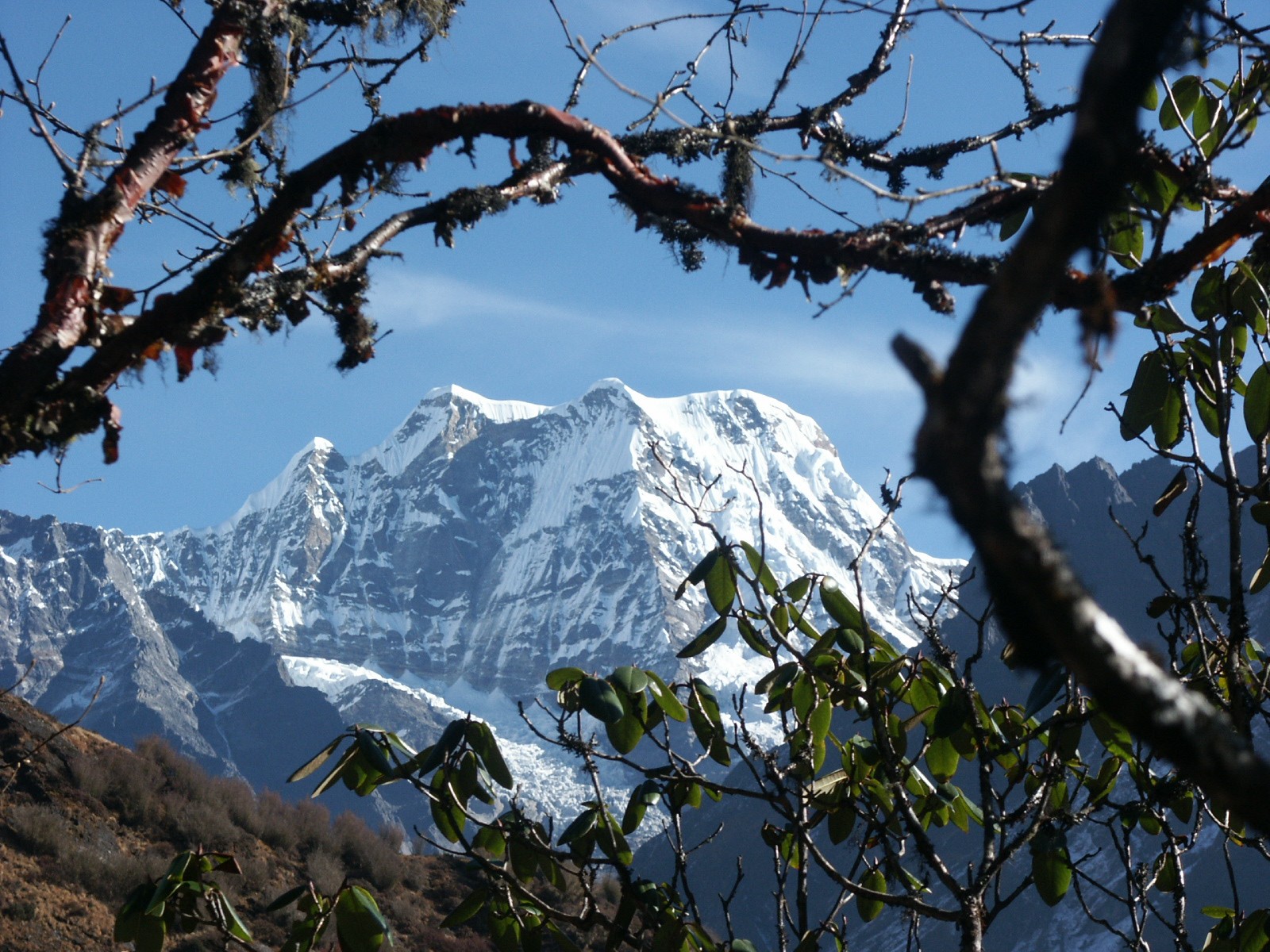
Summit day begins at 2am. You strap on crampons in the dark, the temperature well below zero, and start moving up a glacier you cannot fully see. The wind is quiet or it is not. The altitude is already working on you. This is what trekking to the top of Mera Peak actually looks like.
Mera Peak stands at 6,476m in the Hinku Valley, south-east of Everest. It is Nepal's highest trekking peak, classified by the Nepal Mountaineering Association as a route that does not require an expedition licence or technical rock climbing. That classification matters: it means an experienced trekker can reach the summit without years of technical mountaineering training. It also conceals how serious this mountain is. Roughly half of all climbers who attempt Mera Peak reach the top.
This guide covers what you need to decide whether Mera Peak is the right objective for you, and how to give yourself the best chance of standing on the summit: full itinerary, altitude risks, permits, costs, best season, and what summit day actually involves.
What is Mera Peak?
Mera Peak is classified by the Nepal Mountaineering Association as a trekking peak, not an expedition peak. In practice, that means a trekking permit rather than an expedition licence, and no technical rock climbing on the standard route. What it does require: glacier travel, crampons, an ice axe, careful altitude acclimatisation, and prior Himalayan experience. The mountain sits in a genuine high-altitude environment, and it demands preparation to match.
The approach runs through the Hinku Valley, reached via a flight from Kathmandu to Lukla, the same airstrip used by Everest Base Camp trekkers. From Lukla, the route diverges south-east into terrain far less crowded than the Khumbu. Most trekkers see very few other groups on the Hinku Valley trail. The mountain sits within Makalu Barun National Park.
The summit reward is significant. From the top of Mera Peak, on a clear day, you can see five of the world's fourteen 8,000m peaks simultaneously: Everest, Lhotse, Makalu, Cho Oyu, and Kangchenjunga. Much Better Adventures describes it as "a vista that is nothing short of miraculous." This is one of the most panoramic summit views available anywhere in the Himalayas at this permit level.
Is this trek right for you?
Is Mera Peak suitable for beginners?
Mera Peak is well suited to experienced trekkers who are new to mountaineering, but it is not appropriate for first-time Himalayan trekkers. If you have completed a route above 4,500m (Everest Base Camp, Manaslu Circuit, or Annapurna Circuit) and felt strong at altitude, you have the right foundation. If the Himalayas are new to you entirely, build that base first.
Fitness requirements
The trek requires cardiovascular endurance for six to eight hour days across multiple consecutive days at high altitude. You need to be comfortable carrying a pack on sustained ascents and descents, in cold conditions, at the end of a long week.
Fitness alone does not guarantee the summit. Ian Taylor Trekking puts it directly: "People assume strong fitness guarantees success — it doesn't. A rushed itinerary can destroy even the fittest climber." Acclimatisation is physiological and cannot be compensated for by being in good shape. This is one of the most important things to understand before you book.
Pre-trip training recommendations
Start structured training at least three to four months before departure. The most useful things you can do:
- Sustained cardio three to five times per week: running, hiking, cycling. Build your aerobic base progressively.
- Stair and incline work with a loaded pack. Practice the specific movement pattern of ascent under weight.
- If possible, do a winter hill walk in cold temperatures before the trek. Cold adaptation is different from aerobic fitness.
- If you have never been above 4,500m, complete Everest Base Camp or a similar route first. Knowing how your body responds to altitude is essential before committing to a summit attempt.
Mera Peak trek itinerary (standard 18-21 days)
The standard Mera Peak expedition runs 18 to 21 days from Kathmandu. Itineraries shorter than 17 days compress acclimatisation and reduce your summit probability significantly. Any operator offering a 14 or 15-day Mera Peak package is cutting acclimatisation days. The mountain is still there at the end of a shorter itinerary; your ability to climb it safely may not be.
One specific decision point matters above all others: the night at Mera La before moving to High Camp. Highland Expeditions summarises the pattern observed across hundreds of expeditions: "Many climbers who go straight to Mera high camp from Khare are turned back due to tiredness and altitude sickness, whereas those who stayed overnight at Mera La have a greater success ratio." The overnight stop at Mera La adds a day to your itinerary. It is worth it.
- Days 1-2: Kathmandu (1,400m) — arrival, trek preparation, permits, gear check
- Day 3: Fly Kathmandu to Lukla (2,860m)
- Days 4-5: Trek to Chutanga and cross Zatrwa La (4,610m)
- Days 6-7: Descend to Thuli Kharka, continue to Kothe (3,600m)
- Days 8-9: Thangnak (4,350m) with acclimatisation day
- Days 10-11: Khare (5,045m), acclimatisation crossing to Mera La and return
- Day 12: Mera Base Camp (5,300m)
- Day 13: Acclimatisation and equipment check at Base Camp
- Day 14: Move to Mera High Camp (5,800m)
- Day 15: Summit day (6,476m), descend to High Camp or Khare
- Days 16-17: Descent to Lukla
- Day 18: Fly Lukla to Kathmandu
Altitude and acclimatisation: what to expect above 5,000m
Mera Peak involves sustained time above 5,000m in remote terrain, far from road access and medical facilities. This is the part of the planning most people underestimate.
At 5,800m, the oxygen available to your body drops below 66% of sea-level concentration. Mountain Monarch describes what this means in practice: "With oxygen levels below 66%, every movement becomes slow. It will feel difficult to breathe and your guide and team will be there to support both physically and mentally." This is normal at this altitude. It is not a sign that something has gone wrong. The question is whether your body has had enough time to adapt.
- Acute Mountain Sickness (AMS): headache, nausea, fatigue, dizziness. Common above 3,000m. Usually manageable with rest and acclimatisation days. Do not ascend while symptomatic.
- High Altitude Cerebral Oedema (HACE): severe AMS that progresses to confusion, loss of coordination, and loss of consciousness. Emergency. Descend immediately and administer Dexamethasone.
- High Altitude Pulmonary Oedema (HAPE): fluid in the lungs, producing breathlessness at rest, persistent cough, pink frothy sputum. Emergency. Descend immediately and administer Nifedipine.
The standard acclimatisation rule above 3,000m: do not increase your sleeping altitude by more than 300 to 500m per day, and take a rest day every three days of ascent. A good itinerary follows this automatically. A short itinerary frequently does not.
Before you leave home, consult a travel medicine doctor and discuss three medications: Diamox (acetazolamide) for AMS prevention, Dexamethasone for HACE emergency use, and Nifedipine for HAPE emergency use. Carry a pulse oximeter and know your baseline SpO2 before you gain altitude.
On summit night, the decision to continue or turn back requires judgment. FullTimeExplorer documented a real example: a climber with AMS symptoms at 2am took altitude medication and waited an hour to see if conditions would improve. They did not. The climber turned back. The rule is clear: if symptoms are not improving after one hour of rest at the same altitude, descend. The summit will be there next time. Your health may not tolerate a mistake at 6,000m.
For detailed medical guidance, the Wilderness Medical Society publishes clinical guidelines on altitude illness that are freely available online.
Summit day on Mera Peak: what actually happens
Alarms go at around 2am. You dress in High Camp conditions: multiple layers, down suit or equivalent, expedition mitts. Crampons and harness go on in the dark. The team moves out together.
The route ascends a snow slope to the North Col, then traverses the glacier to the central summit at 6,461m before continuing to the true high point at 6,476m. There are no fixed ropes on the standard route. There is no technical rock climbing. There is no crevasse navigation required on the main line. What distinguishes Mera Peak from a high-altitude trek is the glacier section: you are moving on ice in crampons with an ice axe in your hand, and the angle and exposure are real.
Adventure Pulse described the experience precisely: "crampons biting into the solid ice slope, testing for traction before pushing upward." For most people on Mera Peak, this is their first time on glacial ice. Your guide will brief you on technique before the summit push, but the physical sensation is something to be mentally prepared for.
Summit time from High Camp is four to six hours depending on conditions and team pace. Descent takes two to four hours. Most accidents in mountaineering happen on descent, when fatigue is highest and attention drops. Keep the same discipline going down that you applied coming up.
September attempts face a specific hazard: unconsolidated monsoon snow. A TripAdvisor review from a September expedition noted that all climbers in a group were turned back below 6,200m, with no clear summit weather window across ten days. September is not impossible, but the odds are different.
A 74-year-old climber summited Mera Peak in October 2023, via Footprint Adventure. Their review: "One of my hardest and at the same time one of the best mountain climbs. If it was not for my guide I would not have stood on Mera Peak." The dependency on a skilled guide is universal across all ages and fitness levels. It is not a sign of weakness. It is how this mountain is climbed.
How much does the Mera Peak trek cost?
The total cost of a Mera Peak expedition from Kathmandu ranges from USD 1,800 to USD 3,500 per person when booked through a reputable Nepali operator. The range reflects itinerary length, group size, and guide experience.
- NMA Trekking Peak Permit: approximately NPR 25,000. Check the Nepal Mountaineering Association website for current fees, as these are updated periodically.
- TIMS Card: NPR 2,000 to NPR 3,000
- Makalu Barun National Park entry: NPR 3,000 for SAARC nationals, NPR 15,000 for all others
- Lukla flights, round trip: USD 250 to USD 350 depending on season and booking timing
- Agency fee covering licensed guide, porter, tea house accommodation, and meals on trek: USD 1,200 to USD 2,500 depending on itinerary length and group size
- Technical gear rental (crampons, ice axe, harness) if not bringing your own: USD 100 to USD 200. Most Kathmandu outfitters carry this equipment.
- Personal expenses including tips, extra food and drinks, emergency fund: allow USD 300 to USD 500
Itineraries priced below USD 1,500 in total are a warning sign. Aggregated reviews note that cheaper packages frequently eliminate acclimatisation days, use less experienced guides, or do not carry adequate emergency equipment. The saving is not worth the risk. A summit attempt costs significantly more to fail than to do properly the first time, and the medical cost of an evacuation from the Hinku Valley removes any budget calculation entirely.
Best time to trek Mera Peak
Mera Peak has two viable seasons and two to avoid.
Pre-monsoon (March to May) is the primary season. Weather is stable, the snow on the glacier is firm, and summit windows are reliable. April and May offer the best conditions across this window. April specifically has the most consistent historical success rates: firm glacier, long days, and dependable weather patterns.
Post-monsoon (late September to November) is the secondary season. October and November are the strongest months in this window. September sits at the tail of the monsoon and carries significant risk: the mountain accumulates deep, unconsolidated snow through the monsoon months, and multiple accounts from September expeditions report waist-deep snow on the upper slopes with no summit window for days at a time. If you are targeting the post-monsoon season, book October or later.
Monsoon season (June to August) is not recommended for any Himalayan trekking peak. Precipitation is constant, trails become dangerous, and visibility on the summit is negligible.
Winter (December to February) is for specialist teams with full expedition equipment and the technical skills to manage extreme cold and high wind. Not appropriate for a standard guided Mera Peak attempt.
Single best month: April. The glacier is firm, the days are long, and weather patterns are the most stable of any month in the calendar.
What to pack for Mera Peak
Mera Peak requires a specific category of gear that goes beyond what a standard Himalayan trek demands. The technical items are non-negotiable.
Technical gear for glacier and summit
- Mountaineering boots: double or single-layer, with a stiff sole that accepts crampons. This is the most important purchase decision. Get this fitted properly before you leave home.
- Crampons: 12-point, must be compatible with your boots. Bring or rent; verify fit before departure day.
- Ice axe: 70 to 75cm for most people. Your guide will brief you on basic self-arrest technique.
- Climbing harness: sit harness, standard mountaineering type
- Locking carabiners: two minimum
- Helmet: for objective protection on the upper glacier and summit slopes
High-altitude clothing
- Down suit or a combination of high-altitude down jacket and insulated trousers. Temperature at High Camp can drop to -20C.
- Balaclava and insulated beanie
- Liner gloves plus expedition-weight outer mitts. Dexterity and warmth at the same time: liner gloves handle carabiners, mitts go on when moving.
- UV-protective glacier goggles: not sunglasses. At altitude on snow, UV intensity is extreme. Sunglasses do not provide adequate coverage.
Medical kit (doctor-prescribed)
- Diamox (acetazolamide): AMS prevention
- Dexamethasone: HACE emergency use only
- Nifedipine: HAPE emergency use only
- Pulse oximeter: carry one, establish your baseline SpO2 at sea level before you travel
- Personal first aid kit: blister care, anti-diarrhoeals, pain relief, rehydration salts
Standard trekking gear follows the same principles as any Nepal expedition: moisture-wicking base layers, fleece mid-layer, waterproof shell, trekking poles, head torch with spare batteries, water purification tablets or filter. Most technical items are available for rent from well-stocked Kathmandu outfitters, which reduces what you need to transport from home.
Permits and regulations
Three permits are required for Mera Peak. All are arranged through your licensed Nepali agency, which handles the paperwork as part of the expedition package.
- NMA Trekking Peak Permit: issued by the Nepal Mountaineering Association. Required for all climbers. Must be applied for through a licensed Nepali agency. Your operator handles this.
- TIMS Card (Trekkers' Information Management System): required for all foreign trekkers in Nepal. Issued through agencies or the Nepal Tourism Board office in Kathmandu.
- Makalu Barun National Park entry fee: paid at the park checkpoint on the Hinku Valley approach. Fee differs for SAARC nationals versus international trekkers.
A regulation change in 2023 requires that all trekkers in designated trekking areas, including the Hinku Valley, be accompanied by a licensed Nepali guide. Any agency expedition automatically complies with this requirement. Independent trekkers must arrange a licensed guide.
For current permit fees and the official application process, see the Nepal Mountaineering Association website at nepalmountaineering.org.
Frequently asked questions
What experience do you need to climb Mera Peak?
At minimum: completion of a high-altitude route above 4,500m, such as Everest Base Camp, Manaslu Circuit, or Annapurna Circuit, where you felt strong and experienced no serious altitude problems. Prior crampon use is helpful but not required; your guide will provide instruction on the mountain. Mera Peak is not appropriate for first-time Himalayan trekkers.
How long does a Mera Peak expedition take?
18 to 21 days from Kathmandu, including flights to and from Lukla. Itineraries shorter than 17 days compress acclimatisation time and reduce summit probability. The two or three days that separate a 15-day and an 18-day itinerary are acclimatisation days, not transit time.
Is Mera Peak suitable for beginners?
Not for first-time Himalayan trekkers. It is appropriate for trekkers who have already been above 5,000m and felt strong there. The glacier section requires basic technical instruction that your guide provides on the mountain, but you need the altitude foundation first. If you are new to the Himalayas, do EBC first.
What are the main risks on Mera Peak?
Altitude illness, including AMS, HACE, and HAPE, is the primary risk. Poor acclimatisation and compressed itineraries are the leading causes of both summit failure and emergency evacuation. Objective hazards on the standard route are low by Himalayan standards: no seracs, no difficult crevasse fields, no technical rock. The mountain is manageable; the altitude is not to be underestimated.
What is the summit success rate on Mera Peak?
Approximately 50 to 60% across all attempts, based on Himalayan Database records and operator data. The single biggest differentiator between successful and unsuccessful attempts is itinerary length and acclimatisation quality, not physical fitness. Trekkers on longer itineraries with acclimatisation stops at Mera La summit at a noticeably higher rate than those on compressed schedules.
What food is available on the Mera Peak trek?
Tea houses on the Hinku Valley approach serve dal bhat, pasta, noodles, omelettes, and soup. Food quality and variety reduce above Khare. Hot water is available throughout for refilling bottles. Carry personal snacks for summit day: chocolate, energy gels, and dried fruit pack well and stay edible in cold temperatures.
Trekking with Highlander
Highlander has been running Mera Peak expeditions since the 1980s. Over 35 years of Hinku Valley experience means specific knowledge that does not appear in any guidebook: which tea houses are reliable at which altitude, how route conditions shift week by week through the season, and what acclimatisation profiles actually produce the best outcomes across a range of client ages, fitness levels, and previous Himalayan experience.
The Highlander Mera Peak itinerary includes all permits, a licensed high-altitude guide, equipment support at every stage, and an acclimatisation schedule built from patterns observed across hundreds of expeditions on this mountain specifically. The overnight stop at Mera La is included. It is not optional.
See the Mera Peak package page for full itinerary details, departure dates, and group sizes.
If you want to test your altitude response before committing to a summit attempt, the Everest Base Camp trek reaches 5,364m over 14 days with no technical requirements, through terrain that overlaps significantly with the Mera approach. Many Highlander clients do EBC first, return with a clear picture of how they acclimatise, and then plan their Mera Peak expedition with that knowledge in hand.

-
PO Box: 10987
Thamel, Kathmandu -
+977-01-4700563, +977-01-4700066
Whatsapp: +977 9851167070

